
The Chinese Mars probe named Tianwen 1, or Quest for Heavenly Truth 1, will fulfil three scientific objectives: orbiting the red planet for comprehensive observation, landing on Martian soil and sending a rover to roam the landing site.
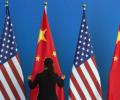
China and the United States were headed for a major diplomatic confrontation as Washington on Wednesday ordered the closure of the Chinese consulate in Houston, a move it said was aimed 'to protect American intellectual property and private information', hinting at cyber espionage.

Beijing's political risks are also escalating because of a renewed wave of public anger in many parts of Balochistan against human rights abuses by Pakistani troops deployed to crush the low-intensity insurgency in the province, the report said.

Analysts, however, predict it would be an uphill climb for export-reliant China's economy going forward as it faced intensified conflict with the US and the negative fallout on its external trade due to Beijing's increasingly aggressive policies towards countries like India resulting in bans of its products and services.
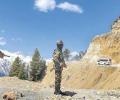
When asked for an update on Tuesday's military-level talks, Chinese foreign ministry spokesperson Hua Chunying told a media briefing in Beijing that both sides reached progress for promoting further disengagement of the border troops at the Western Sector.

In a major policy speech on Monday, US Secretary of State Mike Pompeo said the world will not allow China to treat the strategically important South China Sea (SCS) as its 'maritime empire' and vowed to support worried Southeast Asian countries against Beijing's 'campaign of bullying' to control the resource-rich region.

The "unknown pneumonia in Kazakhstan caused 1,772 deaths in the first six months of the year, including 628 people in June alone", the Chinese embassy in the central Asian country said in a statement.
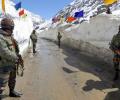
China on Thursday said Chinese and Indian troops have taken "effective measures" to disengage at the Galwan Valley and other areas along the Line of Actual Control in eastern Ladakh and the situation is "stable and improving," days after the two sides agreed on an expeditious withdrawal of soldiers from all the standoff points.
Secretary of State Mike Pompeo said he was taking action against an unspecified number of Chinese officials, including from the ruling Communist Party, under a US law that calls on China to let Americans visit Tibet.
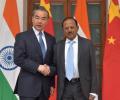
'Both sides had candid and in-depth discussions over easing the current border situation and reached positive common understandings,' it said. 'Both sides welcomed the progress achieved in the recent military and diplomatic meetings, agreed to stay in dialogue and consultation, and stressed the importance to promptly act on the consensus reached in the commander-level talks between Chinese and Indian border troops, and complete disengagement of the front-line troops as soon as possible,' it said.

Bayannur, Inner Mongolia Autonomous Region, announced a level III warning of plague prevention and control, state-run People's Daily Online reported. The suspected bubonic plague case was reported on Saturday by a hospital in Bayannur.

'We hope the Indian side will work with the Chinese side towards the same goal, keep up close communication through military and diplomatic channels, and ease the situation and reduce the temperature along the border'

The study noted that humans are not protected from the G4 virus by the immunity offered by other human influenza vaccine strains, indicating that there is no preexisting population immunity to the virus.

The United States, the United Kingdom, the European Union and NATO have expressed concern on the new law and warned of retaliatory measures.

Reacting to India's ban on the Chinese apps at a foreign ministry briefing, spokesman Zhao Lijian said, "The Indian government has the responsibility to uphold the legitimate and legal rights of the international investors including the Chinese ones."
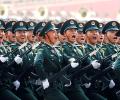
Currently, the reserve forces are under the dual leadership of military organs and local Communist Party committees and they would be brought under the control of the ruling party and the CMC from July 1, the state-run Xinhua news agency reported.

The only way to resolve the current military standoff along the Line of Actual Control in eastern Ladakh was for Beijing to realise that trying to 'change the status quo by resorting to force or coercion, is not the right way forward', India's ambassador to China Vikram Misri said in a hard-hitting interview to PTI.
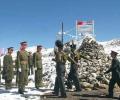
In separate statements, the Chinese foreign and the defence ministries, however, repeated Beijing's stand that India was responsible for the June 15 violent face-off in eastern Ladakh. Defence Ministry Spokesman Col Wu Qian said the two defence ministers are negotiating on the phone.

In his address to RIC Foreign Ministers, Wang said the three countries should 'correctly handle and properly deal with sensitive factors in bilateral relations and safeguard the overall interests of mutual relation', without directly referring to the current round of India-China military tensions along the Line of Actual Control, (LAC).
This is the first time China has commented on the casualties. Though China has not revealed its casualty figure, there were reports that a commanding officer of the Chinese army was among those killed in the clashes. There is no official confirmation about it.
 © 2026 Rediff.com - Advertise with us - Disclaimer - Privacy Policy - Sitemap - Feedback - About us - Terms of use - Grievances